


Aug 6th 2026
The Biggest Suppressor Ruling in Decades Just Happened. Here's What It Actually Means.
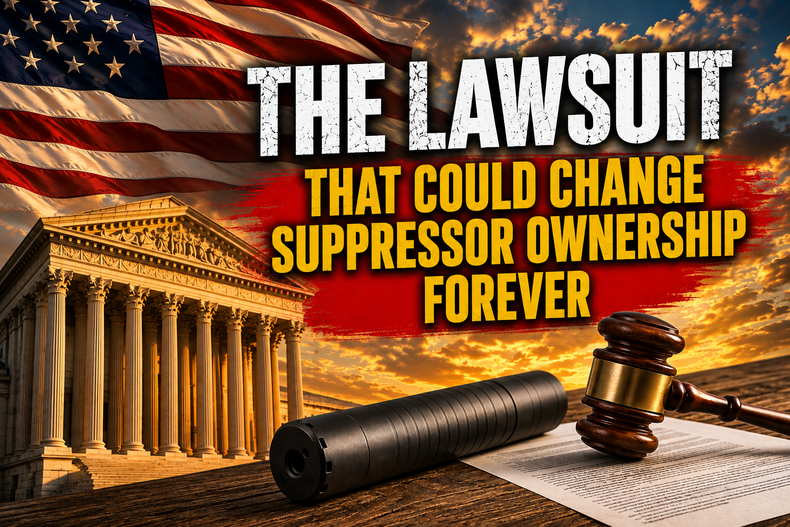
A federal judge just struck down the NFA’s registration and approval system for suppressors, short-barreled rifles, and short-barreled shotguns. Before you celebrate, here’s what actually changes today. Spoiler: nothing. Yet.
The biggest suppressor ruling in decades just happened. So let’s answer the biggest question first. Did the National Firearms Act finally end? Can you buy a suppressor without paperwork now? No. This does not mean dealers are suddenly selling suppressors tomorrow with no Form 4s. It does not mean the NFA is gone. It does not mean suppressors are deregulated. And it definitely does not mean anyone can start ignoring the ATF.
So what actually happened? Why is everyone from the NRA to the nightly news talking about a court order out of Texas? Because this is one of the most important firearms cases we’ve seen in decades. Let’s break it down.
What Actually Happened? The Tax Holding Up the NFA Is Gone.
For nearly a century, suppressors have been regulated under the National Firearms Act. Here’s the part most people miss: the NFA was never written as a ban. In 1934, Congress used its taxing power to regulate suppressors and other NFA items. It imposed a $200 transfer tax, roughly $5,000 in today’s dollars, and built a federal registration and approval process around collecting it. Make ownership expensive and difficult. That was the idea. And when the Supreme Court upheld the NFA in 1937, it did so precisely because the law was a tax.
Fast forward to January 1, 2026. Under the One Big Beautiful Bill Act signed the previous July, that $200 tax dropped to zero dollars for suppressors, short-barreled rifles, and short-barreled shotguns. Which raised a simple but powerful legal question: if the tax is now zero, can the government still rely on its taxing authority to enforce the registration system built around that tax?
The Silencer Shop Foundation, the NRA (through a consolidated case called Jensen v. ATF), Gun Owners of America, the FPC Action Foundation, and a coalition of other gun owners, industry members, and gun-rights groups challenged exactly that. Fifteen states joined the fight. And on August 5, 2026, Judge James Wesley Hendrix of the U.S. District Court for the Northern District of Texas agreed with them. In a 66-page opinion, he declared the NFA’s registration and approval requirements for suppressors, SBRs, and SBSs unconstitutional and issued a permanent injunction. In his words: “Because today’s NFA does not generate any revenue from untaxed firearms, its regulatory provisions cannot be upheld under the taxing power.” When the government argued other congressional powers could prop the system up instead, the court rejected that too, writing that the NFA “cannot be retroactively justified under another power that Congress never invoked.” You can read the full breakdown from NRA-ILA and The Reload .
Three guardrails before anyone gets carried away. First, the ruling only covers items whose tax went to zero: suppressors, SBRs, and SBSs. Machine guns and destructive devices are still taxed and still fully regulated. Second, this is not a nationwide order. It applies to the plaintiffs in the case and, where applicable, their members and customers, because the Supreme Court has limited universal injunctions. Third, the court never ruled on the Second Amendment. This was decided purely on the limits of Congress’s taxing power.
The Seven-Day Stay: Why Nothing Changes Today.
Here’s the part almost nobody is explaining. The judge didn’t let his own ruling take effect immediately. He stayed it for seven days. As 2A Daddy owner Taylor Winston put it: “Think of it as hitting the pause button. The ruling exists. The judge has spoken. But he temporarily paused his own order to give the Department of Justice time to respond.”
During those seven days, the DOJ can ask the Fifth Circuit Court of Appeals to keep everything on hold while the appeal moves forward. That’s why nothing changes today. Nobody is skipping Form 4s. The ATF is still enforcing the law. And every dealer in the country, including us, should continue following the current rules exactly as they exist right now.
What Happens After Seven Days? Two Paths.
Path one, and the most likely one: the DOJ asks the Fifth Circuit for another stay while the appeal is heard, and the court grants it. If that happens, nothing changes. Every manufacturer, every dealer, every customer keeps using the existing Form 4 process while the courts work through the case. “Personally, I think this is the most likely outcome,” Taylor says. “Not because anyone has won or lost, but because the courts are reviewing a decision that could fundamentally change federal firearms regulation.” That review could take many months, and potentially years.
Path two: the seven days expire and the Fifth Circuit does not issue another stay. Now things get interesting, because the plaintiffs, and where applicable their members and customers, could begin receiving the benefit of the injunction while the appeal continues. Would that hand certain companies a huge competitive advantage? Potentially. At least temporarily. Imagine one group of suppressor sellers operating under different federal rules while everyone else still has customers waiting through the traditional NFA process. But that situation creates its own problem: competitors playing by different federal rules. We don’t expect it to last long. The DOJ would keep fighting, and you’d see manufacturers, dealers, distributors, and industry groups across the country lining up to seek the same relief. If your competitor gets one set of rules while you’re stuck with another, you’re going to argue that’s unequal treatment. That’s why we don’t believe this ever becomes a permanent one-company advantage.
Could This Reach the Supreme Court?
Assuming path one plays out, the Fifth Circuit hears the case. Their job isn’t to decide whether suppressors are good or bad. Their job is to decide whether the district judge got the law right. If they agree, this becomes one of the biggest firearms rulings in modern history. If they disagree, the plaintiffs can continue appealing. And because this is a major constitutional question about federal law, there is a very real possibility it eventually reaches the United States Supreme Court. That process could take months or even years, but the outcome could shape suppressor ownership for decades.
Do You Still Need a Tax Stamp for a Suppressor? Yes. Here’s Where Things Stand.
Since the ruling dropped, the same questions keep coming up: Is the suppressor tax stamp going away? Can I buy a suppressor without a tax stamp in 2026? Is the NFA tax stamp gone? Until the courts finish their work, here is exactly where things stand:
- The $200 federal tax is already gone. It dropped to $0 on January 1, 2026 for suppressors, SBRs, and SBSs. The tax stamp itself now costs you nothing.
- The paperwork still applies. Buying a suppressor still means an ATF Form 4, fingerprints, photos, a background check, and waiting for approval before you take possession. Same story for an SBR tax stamp on a Form 1 build.
- The ruling is on hold and is not nationwide. Do not skip any NFA paperwork based on a headline. Nothing about the process has changed as of today.
- State laws are unaffected. If suppressors are restricted in your state, this ruling doesn’t change that.
- Should you buy now or wait? Our take: waiting gains you nothing. The stamp is already $0. If registration eventually falls, you’ve lost nothing by owning now. If it doesn’t, you’ve been shooting suppressed the entire time the courts were arguing.
This is a developing case, not legal advice. If the rules change, we’ll tell you the moment they do.
This Isn’t the Finish Line. It’s the Starting Line.
The biggest takeaway isn’t that a few companies won, and it isn’t that their customers are suddenly exempt from the NFA. The biggest takeaway is this: for the first time in decades, a federal judge has ruled that the government cannot keep enforcing a registration system after the tax that justified it was reduced to zero. That is a massive constitutional question, and whether it survives appeal is still unknown.
Congratulations to the Silencer Shop Foundation, the NRA, Gun Owners of America, every plaintiff, and the legal teams who brought this challenge. Whether you’re a suppressor owner, a dealer, a manufacturer, or simply someone who believes in protecting the Second Amendment, this is one of the most important legal battles of our lifetime. As Taylor put it: “This isn’t the finish line. It’s the starting line.” And we’re here for it.
One more thing. The courts are going to argue about paperwork for months. Your ears don’t have to wait that long.
Check out our full lineup of suppressors at 2adaddy.com/shop-suppressor . Defend your rights loudly. Defend your home quietly.
About the Author
Vincent Capo is the Head of Growth and SEO Strategist at 2A Daddy, a Tennessee-based firearm dealer and suppressor manufacturer dedicated to protecting Second Amendment rights through education, advocacy, and world-class products.